Ever wondered what the difference is between a heart attack or sudden cardiac arrest?
These two terms frequently interchange to describe the same thing.
This can be dangerously misleading given their differences - especially when there’s an emergency with a loved one or colleague.
So how do heart attacks and sudden cardiac arrests differ?
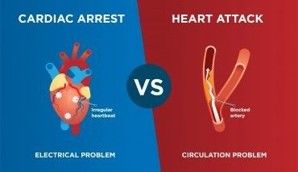
A heart attack happens when a coronary artery becomes blocked, restricting the flow of oxygenated blood to the heart.
A sudden cardiac arrest occurs when the heart stops pumping blood altogether. This can be due to the heart developing an irregular, non-pumping rhythm, or stopping altogether.
If a heart attack is e described as a plumbing problem, cardiac arrest could be described as an electrical or mechanical issue.
How can you tell the difference?
Is the patient conscious?
During a heart attack, the patient is usually conscious. They can communicate and explain what they’re experiencing.
Loss of consciousness comes quickly in a sudden cardiac arrest. The patient will collapse, lose consciousness and will not be breathing normally.
If your loved one or colleague is struggling to breathe, it may seem like they’re still conscious.
‘Agonal breathing’ is the medical term describing this struggle for breath due to a severe health issue, like a cardiac arrest.
Some cardiac arrest situations, may present as the patient gasping or moaning.
Instead of true breathing, it is the body’s reflex reaction to the lack of blood pumping to the lungs.
“Not breathing” does not always mean lying passively. If someone has collapsed and is gasping for breath, but is otherwise unresponsive, cardiac arrest is the likely cause.
Now a heart attack can lead to cardiac arrest.
There are usually plenty of signals that a heart attack is imminent.
Chest pain, heart palpitations, light-headedness or dizziness, fainting and shortness of breath are all signs of a possible heart attack.
The advice for anyone experiencing experiencing these symptoms is clear: call for medical assistance.
Unchecked, a heart attack can escalate into sudden cardiac arrest.
When this happens, the person experiencing the heart attack has developed a dangerous heart rhythm that can cause cardiac arrest.
If this happens, immediate care needs to be given for the patient to survive.
Here’s What To Do:
The first step to helping someone is the same whether they are experiencing a heart attack or a sudden cardiac arrest.
The best thing now is call the emergency medical response number where you are right away.
Speed is critical – especially for cardiac arrest patients, whose chances of survival decrease by up to 10 per cent for every minute they don’t receive treatment following the event.
Of course, there’s plenty we can all do today to be ready to help someone survive either event. Here’s a checklist to get you started. [link to: How Prepare Are You At Home For A Sudden Cardiac Arrest Blog]